August 28th, 2015

THE WAY WE COMMUNICATE THROUGH SPEECH is one of the first things people notice about us! Did you know that the alignment of your teeth can affect your speech? If you struggle with certain elements of pronunciation, it could be attributed to your teeth.
1. Lisp or Whistling
A primary cause of the development of a lisp or whistle is overbite—when upper teeth overlap the bottom teeth too much. Another cause could be gaps in teeth, which impede correct placement of the tongue and allow air to escape while talking, creating a whistling sound. Braces can correct overbite, and close the gaps between teeth.
2. Word Slurring
To correctly form words and regulate talking speed, our tongues need freedom to move. If the structure of the jaw or placement of teeth restricts that movement, stuttering or slurred speech is more likely. In most cases, braces can align the teeth and open up room for the tongue.
3. Mispronunciation
Certain sounds are very difficult (if not impossible) to pronounce when teeth aren’t where they’re supposed to be. For example, fricative consonant sounds like “t” “s” or “ch” which require tongue-to-tooth contact. Orthodontic treatment places teeth where they need to be for better pronunciation.
Orthodontic Treatment Is An Investment In Confidence And Health
Orthodontic treatment isn’t a magical cure for all speech challenges. However, for people working to correct speech disorders, orthodontics can offer life-changing solutions. And the advantages of orthodontic treatment are not limited to speech therapy alone. The confidence that comes from having a straight, beautiful smile and the oral health benefits will last a lifetime.
Don’t let orthodontic-related speech difficulties limit your personal and business relationships or keep you from being your most confident, eloquent self. If you have a friend, family member, neighbor or coworker who would like to learn more about how an orthodontic treatment plan can lead to a happier, healthier life, please pass along this blog post and call us at Gorczyca Orthodontics at 925-757-9000. Find us at www.clubbraces.com.
Thank you. We appreciate your kind referrals.
Thanks for being our valued patients and friends.
August 27th, 2015

STUCK IN TRAFFIC? FEELING TENSE? If you live in East Contra Costa County, California and commute daily on Highway 4, you may have Highway 4 Temporomandular Disorder (TMD).
TMD Can Make For An Uncomfortable Commute
The symptoms of Highway 4 TMD include:
- Headaches
- Tooth pain
- Muscle aches
Your pain may may be chronic or come and go related to your daily commute.
TMD-related problems may include:
- Tight muscles
- Joint inflammation
- Joint damage
- Teeth grinding or clenching (bruxism)
Stress Can Make TMD Worse
One thing for sure, the stress of your commute on Highway 4 can only make your TMD and bruxism worse. Bruxism (teeth grinding) or clenching strains the TMJ and is associated with stress. It's hard to control the habit of tooth grinding when you are commuting or stuck in traffic. That's when a dental splint can help.
A splint is a custom made acrylic appliance that fits over your teeth. It may also be called an orthotic or night guard. A splint can keep your upper and lower teeth apart and reduce muscle strain and joint pain as well as eliminate tooth grinding.
Do You Need Relief From Highway 4 TMD?
Until the Highway 4 Bart line is completed and construction is done, you need not live with all Highway 4 pain and discomfort. Feel good and put your jaw at ease with a commuter Highway 4 TMD splint from Gorczyca Orthodontics. If you have Highway 4 TMD symptoms, call us at Gorczyca Orthodontics at 925-757-9000. Find us at www.clubbraces.com.
Tags: teeth, bruxism, nightguard, splint, TMD, TMJ, temporomandibulardysfunction, temporomandibulardisorder, clinching, grinding, orthotic
Posted in Blog | No Comments
August 25th, 2015

WITHIN FAMILIES, it’s obvious that facial features are hereditary. The best known example is the Habsburg Family, a royal family with large lower jaws.
Anterior crossbites, openbites, or both are seen in parents and grandparents, aunts and uncles, siblings, and cousins of large lower jaw patients. Inheritance is strong. In a recent study, the heritability of mandibular prognathism (large lower jaw) was estimated to be 0.316 and autosomal dominant, suggesting a major gene influences large lower jaw growth.
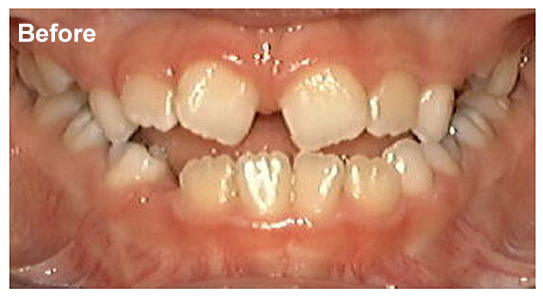
Large lower jaws are present as early as age 7. This is why when your orthodontist sees an underbite or openbite with a large lower jaw, they will do an in-depth analysis of jaw growth as well as take a careful family history for large lower jaw, called Class III skeletal malocclusion.
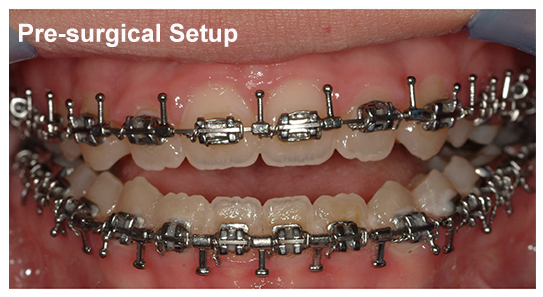
Genetically programmed large lower jaw growth cannot be prevented. Maxillofacial surgeons have been doing large lower jaw surgery for decades and often do several hundred per year. This surgery may be done at age 16 in females and age 21 in males. Your orthodontist can take a hand-wrist film to look at radius bone growth completion to determine the best time for orthognathic surgery (jaw surgery).
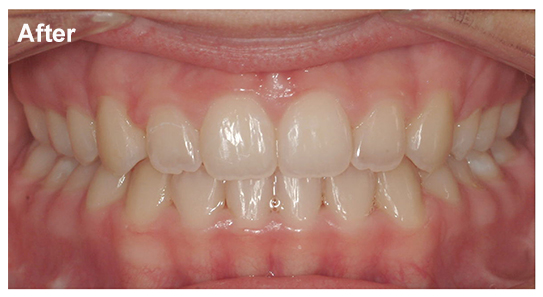
This case was treated by board certified orthodontist Dr. Ann Marie Gorczyca of Gorczyca Orthodontics, Antioch, CA. Find us at www.clubbraces.com or call us at (925) 757-9000 to schedule a complimentary jaw assessment.
Find out if you have the royal jaw. If you would like a commoner smaller lower jaw, we're here to help.
Tags: openbite, anterior crossbite, Class III, maxillary advancement, orthognathic surgery, large lower jaw, prognathism, mandibular prognathism, skeletal class III, Class 3, Underbite, maxillofacial surgeon, mandibular setback, hand wrist film, skeletal malocclusion
Posted in Blog | 1 Comment
August 20th, 2015
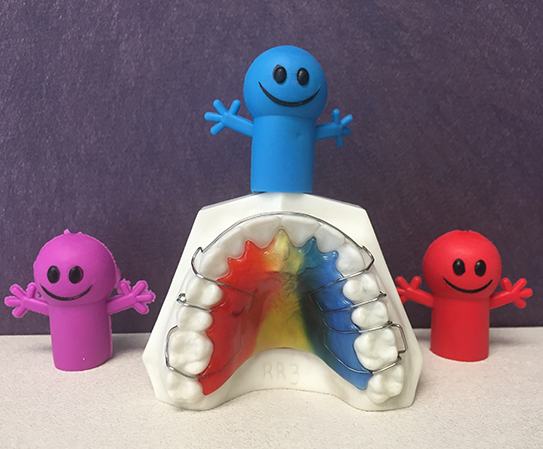
WE’VE ALL HEARD the sad stories about how patients lose their orthodontic retainers. Over and over again, like lemmings jumping over a cliff, orthodontic patients make the same wrong moves and poof, their retainers are gone.
The Top 6 Ways To Lose Your Retainer
Avoid these actions to maintain your retainer for life.
6. Misplace it on vacation
5. Leave it at a restaurant
4. Lose it at your friend’s house
3. Throw it out at McDonald's wrapped in a paper napkin
2. Leave it out for the dog to eat
1. Throw it out in the lunch room
Retainers need to be worn full-time for a minimum of 3 months after braces removal and then every night for one year after you are brace free to insure a straight and beautiful smile. Retainers should be put in at least one night per week for a lifetime to keep your teeth straight and maintain what you and your orthodontist have worked so hard to achieve.
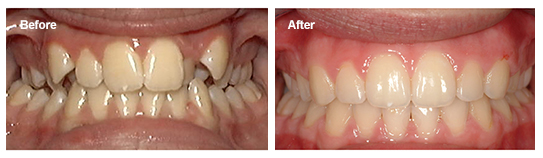
Keep Your Beautiful Smile For A Lifetime!
These teeth were straightened by orthodontist Dr. Ann Marie Gorczyca of Gorczyca Orthodontics, Antioch, CA. You can find us at www.clubbraces.com or call us at (925) 757-9000 if you have lost your retainers and need new ones.
Keep your retainer out of harm’s way by keeping it in a labeled retainer case. Avoid these actions to save your retainer for life.