Our Blog

Overbite and Gum Recession: Save Your Gums with Invisalign

February 5th, 2016

NO MATTER YOUR AGE, fixing your overbite will help you save your teeth and eliminate pain.

Severe Overbite Is An Orthodontic Emergency

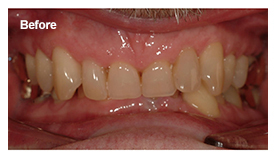
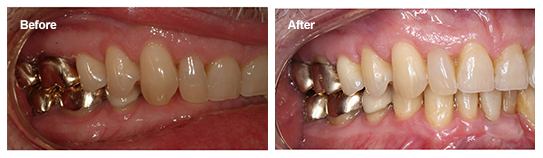
Severe overbite (deep bite) causes gum recession by front teeth biting gums. This trauma produces gum loss (recession). Left untreated, gum and bone loss lead to tooth loss.

With severe overbite, upper front teeth eventually contact the front of the lower gums. This bite trauma causes gum loss.

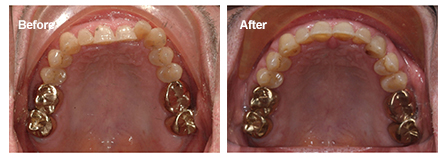
With severe overbite, lower front teeth contact the roof of the mouth (impinging bite). Teeth bite the gum off the back of the upper front teeth causing pain.

Severe Overbite Can Lead To Tooth Loss

Left untreated, severe overbite leads to tooth loss. This is an orthodontic (bite), periodontic (gums), and dental (tooth) emergency.

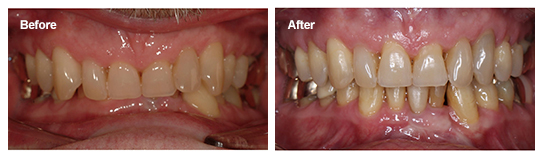
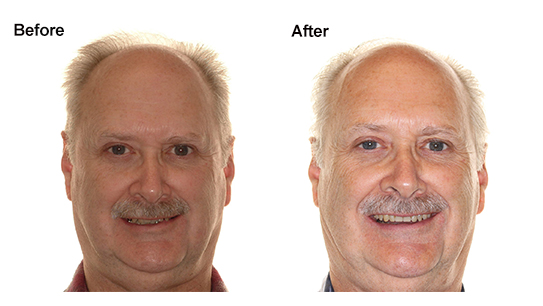
Orthodontic treatment with Invisalign can immediately stop overbite traumatic gum recession. With the Invisalign treatment of your overbite, you can keep your teeth for life.

Not only that, you will have a beautiful new smile. You wil look years younger and feel fabulous!

For your overbite correction with Invisalign, find an orthodontist at the the American Association of Orthodontists at www.mylifemysmile.com.

This Invisalign case was treated by Board Certified Orthodontist Dr. Ann Marie Gorczyca of Gorczyca Orthodontics, Antioch, California www.clubbraces.com (925) 757-9000.

Call us today to schedule your complementary Invisalign examination.

Love your gums. Save your gums. Fix your impinging deep bite today with Invisalign.

Eliminating Tongue-Tie Can Help With Speech AND Dental Health

February 2nd, 2016

YOU’VE PROBABLY HEARD THE TERM “TONGUE TIED”. Did you know that common phrase comes from an actual medical condition that can inhibit speech?

The tongue is attached (or tied) to the base of the mouth by a thin tissue web called the lingual frenum. For some people, the frenum is unusually thick or tight which restricts tongue movement, and therefore, speech.

When that’s the case, it may be best to cut back the frenum a little bit. This is called a lingual frenectomy. It’s a simple procedure that is done by periodontists to whom we refer from our practice. Periodontists are dental specialists with advanced training in surgical procedures of the dental soft tissue of gums, jaws, and the tongue.

Tongue-Tie Can Affect:

  • Speech
  • Feeding and dental development in children
  • One’s ability to keep the mouth clean after eating

Frenectomies Are Simple, Quick Procedures

Whether you’re an adult who wants to un-tie your tongue, or a lingual frenectomy has been recommended for your child, we want to give you an idea of what to expect.

It may sound intimidating, but it’s actually very simple. The frenulum doesn’t have nerves or muscle. It’s simply a connective tissue like an earlobe. The procedure usually takes under 10 minutes, and most patients feel fully recovered within the hour.

How Do You Know If A Lingual Frenectomy Will Help?

It is easy to determine if you or your child need a tongue-tie frenectomy prodecure by this simple test:

Stick out your tongue and try to touch your nose. If your tongue does not turn up and is stuck turned down, you need a lingual tongue frenectomy!

One of the most important reasons to get a lingual tongue frenectomy procedure other than speech and dental health, is that having the tongue tied down in this position makes it very difficult or impossible to eat an ice cream cone!

Questions? Ask Us!

We want to assure our patients that a lingual frenectomy is nothing to be nervous about. If you think a lingual frenectomy may help you or a family member, let us know. And if you have a friend experiencing problems associated with restricted tongue movement, share this article with them!

Thank you for your trust in our practice.

If you have questions about tongue-tie, visit us at Gorczyca Orthodontics, Antioch, CA www.clubbraces.com. Call us at (925) 757-9000.

Orthodontists Are Creating A Smile That May Be Your Fountain Of Youth

January 28th, 2016

TOGETHER, WE’RE WORKING HARD ON THOSE PEARLY WHITES OF YOURS... Regardless of whether you’re 12 years old or 52 years old! As you know, here at our practice, we obsess over our patients’ smiles. We know that a confident smile through ortho treatment can be life changing. But what does your smile have to do with aging?

1. People Who Smile More Are Perceived As Younger

Last year, in an American Psychological Association study, researchers showed thousands of photos of people wearing different expressions to test subjects, who were then asked to guess the ages of the people in the photos. The guesses on neutral expressions were quite accurate, but smiling faces were generally assumed to be years younger than their actual age.

2. Sharing Your Smile (and a laugh) Makes You FEEL Younger—Regardless Of Your Age

We know that sometimes it’s a little hard to smile while you’re wearing braces. Remember, they’ll come off soon and you’re going to look awesome. Remember too, regardless of your age, it’s really not about the number of miles on your smile. It’s about how comfortable you are sharing it!

3. Smiling May Even Help You Live Longer

Living longer—now THERE’S a serious smiling benefit. Could this really be true? A 2010 Wayne State University study examined the relationship between smile intensity and longevity among 230 pro baseball players from a ’52 baseball registry. They found that players with big smiles lived an average of five years longer that those who didn’t (or barely) smiled. Even players with small smiles lived longer than those who didn’t smile.

Facial expression and smiles have long been shown to be a good indicator of people’s emotions—and those with positive emotions are even shown to have better interpersonal skills and more stable marriages. Smiling can have a great impact on your health—it can boost your immune system and reduces stress.

So Here Are Some Tips For Helping Your Smile Keep You Young

  1. Care for your teeth, relentlessly, by doing the basics—brushing, flossing, regular checkups with your regular dentist, etc. You already know HOW IMPORTANT this is during your orthodontic treatment.
  2. Ask us any time you have questions about your oral health.
  3. Smile big, and smile often—even while you have braces!

When you take good care of your teeth, chances are they’ll last a lifetime. And a great smile will make that lifetime longer, healthier, and happier.

We’re Always Available And Always Listening

If you have questions, Orthodontist Dr. Ann Marie Gorczyca and Gorczyca Orthodontics can help. Call us at (925) 757-9000 or visit us at www.clubbraces.com.

You know how to contact us! And, we love hearing from you on our Facebook page!

And thanks, as always, for being our valued orthodontic patients and friends!

What Causes Bad Breath?

January 26th, 2016

LET’S JUST SAY IT… bad breath is unpleasant. And yet we’ve all suffered from it. Sometimes, however, it’s worse than others. You may wonder, what causes bad breath? And perhaps more importantly, what is the best way to prevent it?

Bad breath, or halitosis, can be caused by a number of things. Here are some reasons your breath may not be as fresh as you’d like:

Good Oral Hygiene Makes All The Difference

If you don’t brush and floss everyday, food stays in your mouth and collects bacteria. This bacteria causes bad breath. On top of that, food that remains in your mouth and gets caught in your braces and stuck between teeth will begin to rot and smell bad.

Brush and floss regularly and go to your biannual dental cleanings (or more, as directed) in addition to your regular orthodontic adjustments.

Certain Foods Make Breath Worse Than Others

Watch out for foods such as garlic, onions, cheese, and soda, as they can be a major cause of unpleasant breath. Once food is absorbed into the bloodstream, it’s transferred to the lungs where it is expelled through your breath. Thus, foods with strong tastes or odors, like the ones mentioned above, can stick around longer than you’d like.

Consumption of tobacco products can also cause severe halitosis. If you or someone you know uses tobacco, ask us for assistance in kicking the habit.

Bad Breath Can Be Linked To A Medical Disorder

Our oral health is strongly connected to other health conditions. In fact, bad breath could be the first sign of a medical disorder. Severe and persistent halitosis is a major symptom of dental diseases such as gum disease and cavities. Other maladies can negatively affect our breath as well such as diabetes, sinus infections, and liver or kidney ailments.

What’s Up With Morning Breath?

Morning breath seems to be an especially pungent offender. Morning breath gets to be so bad mainly because of dry mouth. During the day, saliva works to wash away food debris and keep bacteria in check.

When we sleep at night, our saliva production goes down, causing our mouths to become more dry and allowing bacteria to proliferate. Many people sleep with their mouths open as well, which can make dry mouth even worse.

Here’s what you can do to make your morning breath a little less offensive:

  • Clean your teeth and braces before bed. This is a given! The less food bacteria have to munch on, the less odorous your mouth will be in the morning.
  • Keep water by the bed. When you wake up during the night, take a drink of water. Keeping your mouth moist will combat the spread of those smelly bacteria.

We’re Here To Help

For the most part, bad breath is manageable. However, chronic or extreme bad breath is not normal. If you are concerned about halitosis or have any questions, call and make an appointment with us. Our job is to find solutions for a healthier, happier you!

Thank you for being a part of our practice family!

Top image by Flickr user fiverlocker used under Creative Commons Attribution-Sharealike 4.0 license. Image cropped and modified from original.
The content on this blog is not intended to be a substitute for professional medical advice, diagnosis, or treatment. Always seek the advice of qualified health providers with questions you may have regarding medical conditions.

More Topics
diplomate american board of orthodontics Edward H. Angle Society of Orthodontists advanced education in orthdontics
member american association of orthodontists seattle study club american dental association california dental association
Contact Us!
call